Bedding · Fabric guide
Linen or Percale? Choosing Breathable Naturepedic Sheets for Every Season
A sheet is a small climate between the sleeper and the night. Linen and cotton percale both let air move through their weave, yet they create different sensations: linen feels textured and relaxed, while percale is smooth, crisp, and cool to the touch. Understanding how each fabric is made, worn, washed, and layered can help you choose a set that suits your habits through changing seasons.
Published October 20, 2026
Two breathable fabrics, two distinct experiences
In a bedroom, comfort is rarely the work of one object. The mattress, duvet, room temperature, humidity, sleepwear, and bedding all shape how warm or cool a night feels. Sheets sit closest to the skin, so their weave and surface can be especially noticeable. Linen and percale are both popular choices for people who prefer breathable bedding, but neither is universally better. The best fit depends on what you mean by comfort: a crisp, orderly surface or a soft, gently irregular one; a lighter initial hand or fabric that relaxes with time.
Naturepedic offers both organic linen and organic cotton percale sheets. Its linen sheets are made from GOTS-certified organic flax linen and described as stone-washed. Its percale sheets use GOTS-certified organic cotton in a 300-thread-count construction. These details are useful starting points, but the fabric’s everyday feel matters just as much as a label or number on a product description.
Think of the choice less as a contest than as a question of fit. Linen brings visible texture and an easy, naturally rumpled character. Percale brings a flatter, more uniform surface and a crisp hand that many people associate with freshly laundered sheets. Both can be used throughout the year when the rest of the bed is layered appropriately.
What linen feels like on the bed
Linen is made from flax fibers. In a finished sheet, those fibers give the cloth a distinctive character: a little more texture, a sense of substance, and a relaxed drape. Naturepedic describes its organic linen sheets as 185 grams per square meter, or 185 gsm, and notes that they are stone-washed. The listed sizes are Queen, King, and California King; the set includes a flat sheet, fitted sheet, and two pillowcases, with a 15-inch pocket on the fitted sheet.
The first impression may be less sleek than cotton percale. Linen’s surface has natural variation, and its soft folds are part of its appeal rather than a flaw to press away. Its fibers are also described as hollow, a characteristic associated with air and moisture circulation. In practical terms, linen can feel breathable and adapt comfortably across changing temperatures, though the experience will vary with the room, the sleeper, and the bedding layered above it.
Linen is often selected by people who enjoy a tactile, lived-in finish. It can look at home in a spare, modern room, a rustic setting, or a bedroom where natural materials take the lead. Because the fabric has visual depth, it can create interest even in a restrained palette. Naturepedic lists colors including Arctic Snow, Beige, Harbor Island, and Forest Canopy, offering a range from pale neutrals to deeper, nature-inspired tones.
The character of linen changes with use and laundering. Naturepedic notes that its sheets feel softer with every wash. That gradual easing is one reason linen can appeal to people who prefer bedding that develops a familiar, broken-in quality rather than maintaining a sharply pressed appearance. The cloth may wrinkle more visibly than percale, so it is worth asking whether that relaxed look feels inviting to you—or whether it would be a daily distraction.
For care, the listed instructions are straightforward: machine wash warm, tumble dry low, warm iron if desired, and do not bleach. The “if desired” matters. Ironing can create a smoother finish, but many linen owners choose to let the fabric retain its natural creases. Following the care label remains important; laundry routines, water conditions, and machine settings can all influence how fabric looks and wears over time.
The crisp appeal of cotton percale
Percale is a plain weave, commonly described as an even over-and-under structure. The closely balanced weave gives the cloth a matte surface and a crisp, smooth feel. Naturepedic’s organic cotton percale sheets are made from GOTS-certified organic cotton, with a 300-thread-count construction. The set includes a flat sheet, fitted sheet, and two pillowcases, and is available in sizes from Twin through California King. The fitted sheets have a 15-inch pocket.
Compared with linen’s more pronounced texture, percale feels orderly and even against the skin. Its light, breathable character can make it appealing to warm sleepers or people who prefer a cool, fresh-feeling surface at bedtime. “Cool” here describes a tactile impression, not a promise that sheets can control body temperature or room climate. A breathable sheet may contribute to comfort, but it cannot compensate for an overheated room, a heavy duvet, or individual health and sleep factors.
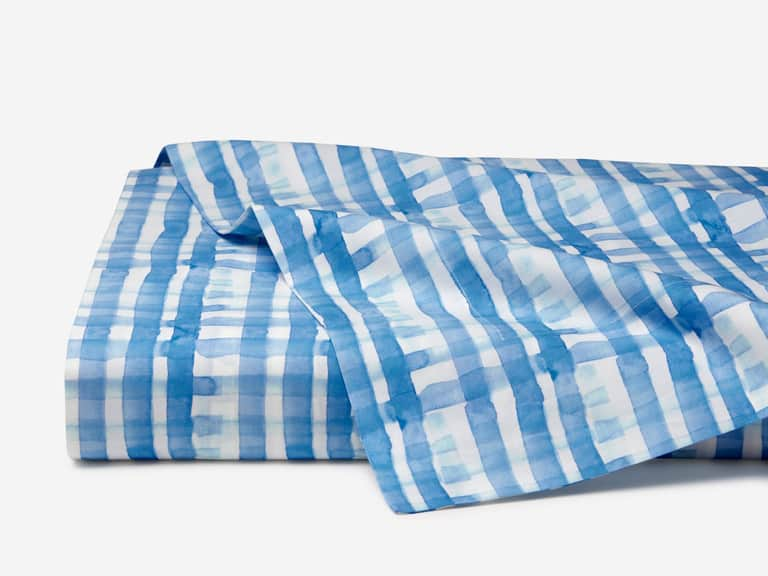
New percale can feel crisp, and it typically becomes softer through repeated washing and use. Naturepedic says its percale is pre-washed and grows softer over time. The fabric’s matte finish and even hand suit people who like a clean, tailored bed. It also pairs readily with patterned or textured layers. For example, a plaid top layer can introduce pattern without making the sleeping surface itself feel busy. The Plaidino Flat Sheet, a printed long-staple cotton percale in a watercolor-blue plaid, offers a separate illustration of how a crisp percale surface can also carry a decorative design.
Care instructions for Naturepedic percale sheets are machine wash warm, tumble dry low, warm iron if desired, and no bleach. As with linen, a careful routine helps preserve the fabric’s appearance. Avoid assuming that a higher thread count automatically means a cooler or better sheet: thread count is only one specification, and the fiber, yarn, weave, finishing, and personal preference all contribute to the finished feel.
How they compare, at a glance
| Consideration | Organic linen | Organic cotton percale |
|---|---|---|
| Surface feel | Textured, substantial, and relaxed | Smooth, crisp, and more uniform |
| Visual character | Naturally rumpled, with visible texture | Matte and tailored, with a flatter finish |
| How it changes | Described as becoming softer with washing | Described as softening over time and with washing |
| Care listed by Naturepedic | Machine wash warm; tumble dry low; warm iron if desired; no bleach | Machine wash warm; tumble dry low; warm iron if desired; no bleach |
| A useful match for | People who welcome texture and a relaxed finish | People who prefer a crisp, smooth sleeping surface |
This comparison is a guide, not a ranking. A person who sleeps warm may enjoy either fabric if the duvet and room are suitable. Someone who dislikes wrinkles may gravitate toward percale; another person may regard linen’s creases as part of a bedroom’s quiet, natural character. If possible, feel both fabrics in person before deciding. Touch is difficult to translate fully through specifications.
Choosing for warm weather, cold nights, and the seasons between
Breathable sheets are often discussed in summer, but the useful question is not simply which fabric is “coolest.” It is how the entire bed manages warmth and moisture through the night. In hot weather, a lighter duvet or blanket, an open window where practical, and a breathable sheet can work together. Cotton percale’s crisp, airy feel may be especially appealing when the room is warm. Linen’s moisture-wicking and air-circulating qualities, as described for the Naturepedic collection, may also suit sleepers seeking a breathable layer.
When temperatures fall, the same sheets can remain in place while the bed gains a warmer blanket or duvet. Linen’s weightier hand may feel reassuring to some sleepers, while percale can provide a familiar, clean-feeling base beneath flannel or a heavier cover. A blanket’s weave and thickness, room conditions, and personal temperature preferences will influence the result. Swapping layers is often more practical than expecting one sheet to solve every seasonal comfort challenge.
For a year-round setup, consider how you want the bed to feel at the moment you climb in, not only how it performs after several hours. Percale offers a crisp, cool touch at first contact. Linen has a more textured surface and a softer, less uniform impression. Neither description predicts every sleeper’s experience, but it helps clarify which sensation you are likely to enjoy night after night.
Color and styling can also support a flexible seasonal look without changing the sheet set. Pale shades can make a room feel light and open, while earthy colors add depth. Linen’s natural texture can bring dimension to a simple arrangement; percale’s smooth face can balance a patterned duvet cover, quilt, or throw. Keep the bed visually calm by choosing one dominant pattern and allowing other layers to stay solid or subtly textured.
A closer look at organic labels and materials
“Organic” is a claim that benefits from context. Naturepedic identifies its linen and percale sheets as GOTS-certified organic. The Global Organic Textile Standard (GOTS) is a textile-processing standard with requirements that cover more than the fiber’s origin. When comparing bedding, look for the named certification and consider what the manufacturer states it applies to. Certification details can matter to shoppers seeking information about materials and production practices, but they do not determine whether a fabric will feel soft, crisp, or comfortable to a particular person.
The two fabrics begin with different plants: flax for linen and cotton for percale. Their resulting qualities are shaped by more than the plant itself. Yarn preparation, weaving, finishing, fabric weight, and laundering all affect the hand and performance of a sheet. That is why a useful comparison considers both the material and the specific construction rather than relying on a broad assumption that all linen or all cotton behaves identically.
Naturepedic’s listed linen weight is 185 gsm, while its percale specification is 300 thread count. These measurements describe different things and should not be compared as if they were the same scale. GSM measures fabric weight per area; thread count refers to the number of threads in a given area under the convention used by the manufacturer. Neither figure alone tells you how a sheet will feel. When possible, use specifications as context, then weigh them alongside weave, finish, care instructions, and your own preferences.
Care habits that help sheets last
Good care is less about elaborate rituals than consistency. Check the product label before washing, separate colors when necessary, and avoid harsh treatments that are not recommended. Naturepedic’s care guidance for both collections calls for warm machine washing, low tumble drying, and no bleach. A warm iron is optional. Respecting those directions can help keep the fabric in good condition while preserving the finish you prefer.
Use an appropriate load size so sheets can move freely in the washer and dryer. Overcrowding can make rinsing and drying less effective, while excessive heat may be hard on textiles generally. Remove bedding promptly when the cycle ends if you want to limit deep creases. For linen, those creases may be welcome; for percale, prompt removal can help preserve a smoother appearance. Adjust the routine to the fabric and the look you want, rather than treating wrinkle-free as the only measure of care.
It is also sensible to rotate between sets when possible. Alternating bedding gives each set time away from regular wear and washing and makes bed changes easier. Store clean sheets in a dry, ventilated place. These practical habits, along with following the manufacturer’s directions, are more reliable than assuming that a fabric needs a complicated maintenance regimen.
A simple decision guide
- Choose linen if: you enjoy a tactile surface, a relaxed drape, and a naturally rumpled look; you want a fabric described as softening with repeated washing; and you appreciate the visual depth of textured cloth.
- Choose percale if: you prefer a smooth, crisp surface and a more tailored appearance; you like the cool, fresh sensation of plain-woven cotton; and you want bedding that pairs easily with varied colors and patterns.
- Think beyond the sheet if: you often wake too warm or too cold. The duvet, blanket, sleepwear, mattress protector, and room conditions may all be part of the picture.
- Check the details before ordering: confirm the mattress size and depth, fitted-sheet pocket, set contents, available color, and current care directions.
If you remain undecided, focus on the sensation you want at bedtime. Do you want to slide into a crisp, smooth surface, or settle into fabric with a little more texture and movement? That question is often more revealing than choosing by thread count, season, or trend alone.
The quiet luxury of a well-chosen sheet
Good bedding rarely announces itself. It is noticed in the small, repeated details: a sheet that fits securely, a surface that feels pleasant against the skin, a fabric that suits the room’s temperature, and a care routine that fits ordinary life. Linen and percale can both contribute to that kind of comfort, but they do so with different textures and visual signatures.
Naturepedic’s organic linen is the option for a more textured, relaxed hand, with a stone-washed finish and a linen character intended to soften through washing. Its organic cotton percale offers a crisp, smooth alternative in a plain weave, with a matte finish and a breathable feel. Both are available in familiar bedding sizes, and both have care directions that fit a straightforward laundry routine.
Ultimately, the right choice is the one you enjoy living with—on cool mornings, warm nights, and all the ordinary evenings between. Let the fabric’s feel guide you, use its specifications to confirm practical details, and build the rest of the bed in layers. When linen or percale suits your senses and your routine, the bedroom becomes less a display and more a place to rest.