Nursery design · Sleep essentials · Fabric care
A Calm Nursery Setup: Evaluating Oeuf Sleep Essentials
A nursery can feel restful without being elaborate. The most thoughtful rooms begin with a safe sleep space, breathable and washable basics, and a layout that makes daily care easier. When considering Oeuf sleep essentials, look beyond a coordinated appearance: examine each item’s purpose, construction, care requirements, and suitability for the child’s age.
Published November 5, 2026
A nursery is a small landscape of repeated routines. In the dim hours before dawn, a caregiver may cross the room half-awake, guided by a night-light and the quiet familiarity of a changing table, a chair, and a crib. By day, the same room must accommodate laundry, books, feeding, and the changing needs of a growing child. Calm, then, is not simply a color palette. It is the result of thoughtful decisions that reduce clutter, support safe sleep, and make everyday tasks manageable.
The word “essentials” can make a nursery checklist seem longer than it needs to be. Bedding sets, cushions, decorative pillows, canopies, and soft toys may look inviting in a catalogue, but the safest infant sleep space is intentionally spare. Families assessing Oeuf nursery sleep essentials—or any brand’s offerings—should begin with the basics: a suitable sleep surface, a properly fitted sheet, clear product information, and care instructions that can realistically be followed. Design matters, but it should serve the room’s purpose rather than crowd it.
Start with the sleep space, not the styling
For an infant, safe sleep guidance takes precedence over decorative preferences. The American Academy of Pediatrics recommends placing babies on their backs for every sleep on a firm, flat, non-inclined surface designed for infant sleep, with only a fitted sheet. Keep loose bedding, pillows, comforters, stuffed toys, and other soft objects out of the sleep area. A crib or bassinet should be used according to its manufacturer’s instructions and current safety standards; families should also follow guidance from their pediatrician and local public-health authorities.
These recommendations are practical, not aesthetic. A bare sleep surface may look stark beside a carefully arranged nursery, but it keeps the infant’s sleep area clear of objects that are not appropriate for that age and setting. A decorative duvet, quilt, or pillow can be displayed elsewhere in the room, away from the crib, if the family chooses—but it should not be used as loose infant bedding. As children grow, sleep arrangements and appropriate bedding change. Check current age-specific guidance rather than assuming that an item suitable for an older child is appropriate for a baby.
When evaluating any sleep product, ask what role it is meant to serve and for whom. Is it a fitted crib sheet, a mattress protector, a pillow for an older child, or a decorative accessory? Does the manufacturer provide clear dimensions, materials, age guidance, and washing directions? If the intended use is ambiguous, seek clarification before bringing the item into a child’s sleep environment. Product descriptions and marketing language cannot replace safe-sleep guidance or an item’s instructions.
What to look for in Oeuf sleep essentials
A brand name or polished presentation tells only part of the story. A useful evaluation separates the qualities of the object from the atmosphere created around it. Read the product details carefully, and compare like with like: a sheet should be assessed as a sheet, a mattress as a mattress, and a decorative textile as décor. For each item, consider its intended age group, dimensions, materials, construction, cleaning needs, and compatibility with the nursery furniture or bedding system it is designed to accompany.
- Intended use: Confirm what the item is designed to do and whether that use is appropriate for the child’s age and sleep setting.
- Fit: Check exact dimensions and the relevant manufacturer’s guidance. A fitted sheet should be designed for the specific mattress dimensions and fit securely.
- Materials: Look for a clear description of fiber content, fabric construction, and any finishes or treatments the manufacturer chooses to disclose.
- Construction: Examine seams, elastic, closures, and other details that affect fit, durability, and routine handling.
- Care: Make sure washing and drying instructions suit the household’s laundry habits and are clear enough to follow.
- Documentation: Use the product’s current instructions and applicable safety information, rather than relying on appearance or broad promotional claims.
This checklist is useful whether a family is comparing Oeuf items, assembling a room from several brands, or deciding that a simpler setup is preferable. It also helps distinguish verified information from assumptions. A material described as natural, organic, breathable, or gentle may tell you something about its composition or marketing position, but such language does not by itself establish that a sleep product is suitable for every child or every sleep situation. Ask what the claim means, where the information appears, and whether it applies to the complete product or only one component.
Fabric feel, airflow, and the nursery climate
Textiles influence how a room feels to the touch and how easily it can be maintained. Cotton, linen, and other fibers may differ in softness, weight, weave, and drying time; finishes and fabric construction also affect the hand of the cloth. A crisp percale, a softly brushed flannel, and a textured woven cotton each create a different sensory impression. Those distinctions can matter for household comfort and seasonal use, but no fabric should be treated as a substitute for safe sleep practices or a reliable way to regulate a baby’s temperature.
In a nursery, “breathable” is best approached as a description of textile characteristics, not a blanket safety guarantee. The room’s temperature, the child’s clothing, and the sleep environment all matter. Follow pediatric guidance on dressing a baby for sleep and avoid overheating. If a fabric or product description makes a performance claim, check whether it is supported by specific information from the manufacturer. Terms such as “cooling” or “temperature-regulating” may sound reassuring, yet they do not remove the need to keep the sleep area clear and follow age-appropriate recommendations.
For families weighing fabric choices, practical questions often prove more useful than a single claim about softness. Does the textile feel comfortable against the skin? Does its weight suit the intended use? Is the weave likely to snag in the household’s day-to-day routine? Can the item be washed without special equipment? A nursery textile is part of a working room, not just a still-life arrangement. Its success depends partly on how it behaves after repeated use and laundering.
Care instructions are part of the design
A nursery item that is difficult to clean can become a source of friction. Before choosing bedding or other washable essentials, review the care label and the manufacturer’s instructions. Note the recommended water temperature, cycle, detergent cautions, drying method, and any restrictions on bleach or ironing. A fabric that requires special handling may still be the right choice for a particular household, but it is better to understand those requirements before purchase than to discover them after a spill or an overnight laundry emergency.
Wash new textiles before use when the manufacturer recommends it, and wash items according to their labels. Keep a small rotation of suitable fitted sheets so that a clean one is available when another is in the wash. This is a simple planning measure, not a reason to add unnecessary bedding to the crib. Store spare linens in a nearby drawer or shelf, separated from products meant for older children or for decorative use. Clear labeling and a consistent routine can help other caregivers understand what belongs in the infant sleep area.
Fabric certifications may help shoppers understand how a product has been assessed against particular standards, but the details matter. Read the product-specific documentation and identify what the certification covers. It may refer to fiber, processing, or other defined criteria; it does not automatically answer questions about fit, construction, age suitability, or safe use. Treat certifications as one part of a broader evaluation, alongside the manufacturer’s instructions and relevant independent guidance.
Make the room work in ordinary light
A calm nursery is often designed around movement rather than a photograph. Can a caregiver reach the crib without weaving around furniture? Is there a place to set down clean clothes? Can the room be tidied quickly at the end of a long day? A clear route between the door, the sleep space, and the changing area can make repeated tasks easier. Keep cords and other hazards out of reach, secure furniture according to its instructions, and make sure storage does not obstruct access to the crib.
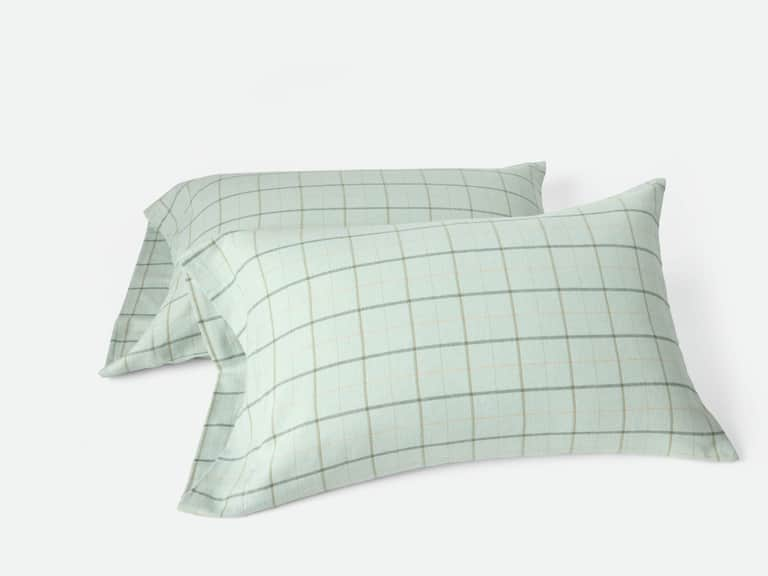
Soft neutrals, natural-looking materials, or a restrained pattern may help a small room feel visually settled, but calm does not depend on a particular trend. A single accent textile can provide color without making the room feel crowded. Plaid, stripes, or a tonal weave can add pattern in curtains or a chair throw used away from the infant sleep surface. In a compact nursery, repeating a limited palette across a few items often creates more coherence than filling every surface with coordinated accessories.
Lighting also shapes the room’s rhythms. A low, softly directed light can help a caregiver move through nighttime tasks without relying on bright overhead illumination, while daylight can make daytime routines feel distinct. Choose fixtures and placement with safety in mind, and follow product instructions. The goal is not to turn the nursery into a sleep laboratory. It is to make essential tasks visible and accessible while preserving a straightforward, uncluttered layout.
Avoid the pressure to buy a complete set
A coordinated collection can be appealing because it promises a finished room in a few decisions. Yet families rarely need every matching item for the space to feel considered. Begin with what the room must do, then add pieces only when they solve a genuine problem or serve a clear purpose. A crib sheet, storage for linens, a safe changing setup, and a practical light may contribute more to everyday comfort than a large assortment of decorative layers.
This measured approach can also make product comparisons more honest. When considering Oeuf sleep essentials, or any nursery range, ask whether each item fills a real need, fits the existing furniture, and can be maintained without undue effort. A product’s visual harmony with the room is a legitimate design consideration; it simply should not outrank safety, fit, or function. If the same role can be served with fewer objects, the simpler arrangement may be easier to clean and live with.
A short list can prevent both overbuying and decision fatigue:
- Identify the child’s current age and the intended use of each item.
- Confirm that sleep products match the relevant furniture and manufacturer instructions.
- Prioritize washable essentials and understand their care requirements.
- Keep decorative bedding and accessories separate from an infant’s sleep space.
- Revisit the setup as the child grows, rather than trying to anticipate every future stage at once.
A thoughtful evaluation, not a perfect room
Nursery decisions are made amid real constraints: limited space, changing budgets, hand-me-down furniture, differing climates, and the demands of everyday caregiving. A useful review of Oeuf sleep essentials should make those decisions clearer, not suggest that a beautiful room requires a long shopping list. Product details can help families compare fabrics, construction, fit, and care—but no brand can replace safe-sleep guidance or a caregiver’s attention to the child’s changing needs.
The most dependable nursery is not necessarily the one with the most coordinated textiles. It is the one where the sleep space is appropriate for the child’s age, the instructions are understood, the necessary items are easy to maintain, and the room supports caregivers as they move through daily routines. Texture, color, and pattern can give the space its character. A clear surface, a dependable fitted sheet, and a workable laundry routine give it its foundation.
Before settling on any nursery purchase, read the current product information and follow the item’s instructions. For questions about infant sleep, consult your pediatrician and trusted public-health guidance. With that foundation in place, families can choose Oeuf essentials—or other well-documented options—with a more grounded sense of what the room needs: comfort where it belongs, care that fits real life, and a sleep environment shaped first by the child’s safety.